
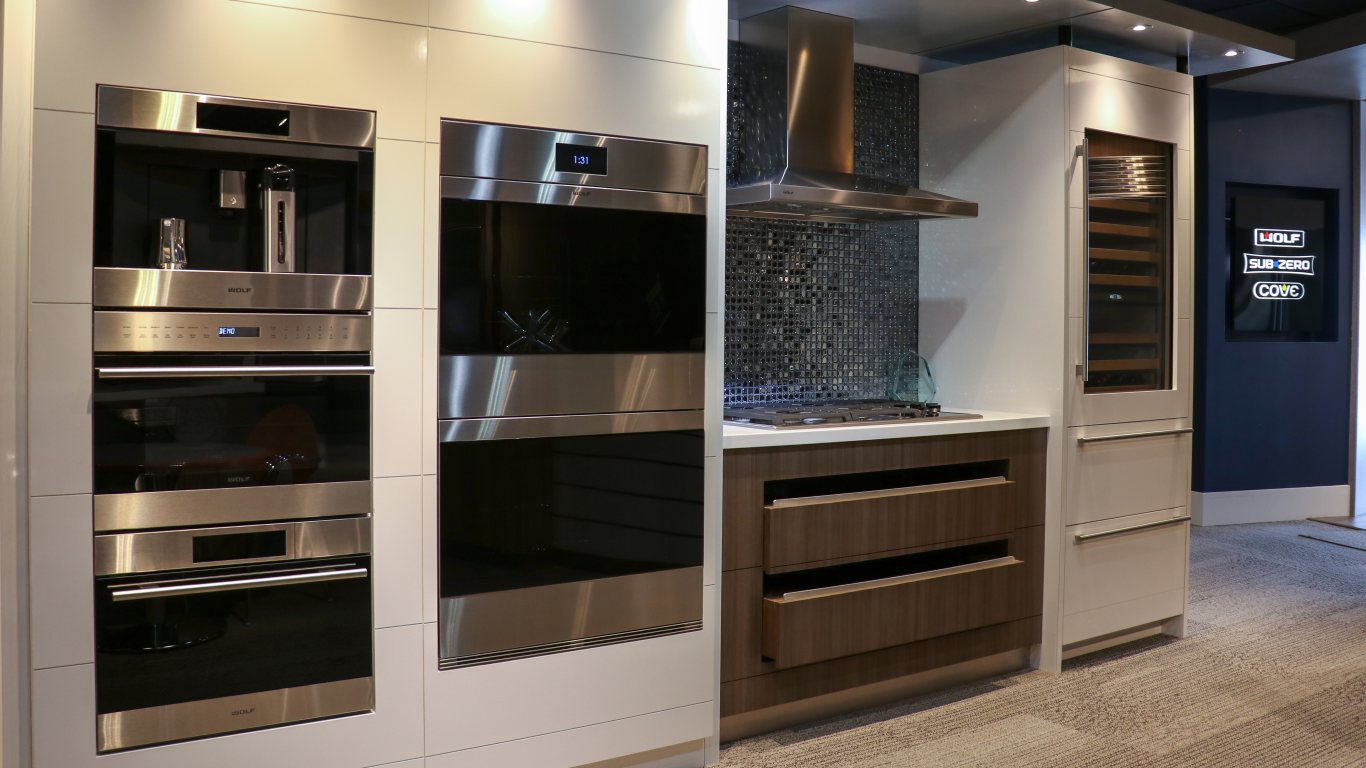
Explore the myths and reality regarding a key question for today’s builders and property managers
For years, a persistent belief has circulated through the residential construction and property development world: luxury appliances don’t belong in rental properties. The reasoning seems familiar and intuitive: high-end refrigerators, washers, dryers and the like are perceived as fragile, overly complex, expensive to service, and prone to misuse by tenants. In other words, the economics and upkeep requirements don’t work.
But as rental properties evolve, particularly in the build-to-rent (BTR), luxury multifamily, and high-end single-family rental markets, that assumption deserves a closer look.
Today’s luxury appliances are not the delicate showpieces of decades past. They are increasingly engineered for durability, serviceability, and real-world use. In fact, often outperform lower-tier models in longevity and reliability. For builders, developers, and remodelers, the conversation is shifting from “Can luxury appliances work in rentals?” to “When do they make financial and operational sense?”
Let’s separate myths from reality.
Why This Myth Exists
The idea that luxury appliances are inherently high-maintenance stems from a few legacy perceptions:
- More features mean more things to break
- Premium parts equal premium repair costs
- Tenants won’t treat high-end appliances carefully
- Specialized service is harder to obtain
While these concerns were not entirely unfounded in earlier generations of high-end products, they no longer reflect how leading manufacturers design and support their appliances today.
In fact, many luxury brands build products specifically with commercial-grade components, modular service access, and long-term reliability in mind.
Myth #1: Luxury Appliances Break More Often
Reality: Many luxury appliances are engineered for heavier use than mass-market models.
High-end manufacturers frequently draw from commercial or professional kitchen design standards. Thicker-gauge metals, more robust motors, and higher-duty-cycle components are common.
Brands such as Sub-Zero Group, Miele, and Thermador build platforms designed to perform consistently over long lifespans. This can be 15–20 years or more when properly installed and maintained.
By contrast, many entry-level appliances are designed for shorter replacement cycles. While initial purchase prices are lower, the frequency of replacement and service can be higher over time.
For rental projects:
Fewer failures mean fewer service calls, fewer tenant complaints, and less operational friction.
Myth #2: Luxury Appliances Are Too Complicated for Renters
Reality: Modern luxury appliances emphasize intuitive design.
Touchscreens, guided cooking modes, and smart diagnostics are often cited as potential complexity risks. In practice, these features tend to simplify operation rather than complicate it.
Most premium manufacturers now focus heavily on:
- Plain-language menus
- Preset cooking modes
- App-based tutorials
- Error-code explanations that guide corrective action
Instead of creating confusion, these features often reduce user error and misuse.
For property managers, this translates into:
- Fewer “how do I use this?” calls
- Reduced accidental damage
- Faster troubleshooting
Complexity becomes a benefit when it’s paired with thoughtful interface design.
Myth #3: Repairs Are Always More Expensive
Reality: Parts may cost more, but failures occur less frequently, and diagnostics are often faster.
Luxury appliances often incorporate:
- Built-in diagnostic systems
- Modular component layouts
- Easier front-access service panels
These design choices reduce labor time, which is a major driver of service cost.
Additionally, many premium brands offer:
- Longer standard warranties
- Extended service programs
- Strong factory-trained service networks
When viewed over a 10- to 15-year horizon, total cost of ownership frequently favors higher-end appliances.
Myth #4: Tenants Don’t Care About Appliance Quality
Reality: In higher-end rental segments, appliances strongly influence leasing velocity and rental rates.
In luxury multifamily and BTR communities, appliances are no longer background infrastructure. And indeed market data shows that the rental market, like other markets, is moving upscale. Given this backdrop, premium appliances become marketing assets.
Consider the following for high-quality appliance packages:
- Improve perceived value
- Support premium rents
- Differentiate properties in competitive markets
- Enhance online listing photography
For renters comparing similar floor plans, appliance quality can be a decisive factor.
The Financial Case: Total Cost of Ownership (TCO)
Many builders and developers increasingly evaluate appliances using TCO rather than purchase price alone.
Key TCO factors include:
- Initial product cost
- Installation cost
- Service frequency
- Replacement cycles
- Energy and water efficiency
- Impact on rental rates
Luxury appliances often score favorably because:
- They last longer
- They require fewer replacements
- They reduce maintenance incidents
A mid-tier refrigerator replaced twice over 12 years may ultimately cost more than a single premium refrigerator installed once.
Where Luxury Appliances Make the Most Sense in Rentals
Luxury appliances are not an all-or-nothing proposition. Strategic specification matters.
Ideal Use Cases
- Build-to-rent communities
- Class A multifamily developments
- High-end single-family rentals
- Executive or corporate housing
- Urban infill projects targeting professional renters
Selective Deployment
Many developers choose a hybrid approach:
- Premium refrigeration
- Mid-to-high-tier cooking appliances
- Durable dishwashers
- Simplified laundry solutions
This allows projects to capture premium perception while controlling budgets.
Durability Features That Matter Most
When specifying luxury appliances for rental environments, professionals should prioritize:
- Proven Platforms. Choose product lines that have been in production for multiple years with strong service histories.
- Metal Construction. All-metal knobs, hinges, and handles outperform plastic components.
- Sealed Electronics. Protection from moisture, heat, and grease reduces failure rates.
- Modular Design. Components that can be replaced independently minimize downtime.
- Widely Available Parts. Strong domestic parts distribution is critical.
A knowledgeable distributor like ADU can identify models optimized for these criteria.
Installation Quality: The Hidden Reliability Factor
Many perceived “appliance failures” are installation issues:
- Inadequate ventilation
- Improper electrical supply
- Poor leveling
- Incorrect gas pressure
- Insufficient clearances
Luxury appliances are engineered to tight tolerances. When installed correctly, they perform exceptionally well. When shortcuts are taken, problems emerge.
Professional distributors play a critical role by:
- Reviewing plans
- Verifying utilities
- Providing installation specs
- Coordinating with trades
This front-end coordination dramatically reduces post-occupancy issues.
Energy Efficiency and Utility Costs
High-end appliances often exceed minimum efficiency standards.
Benefits include:
- Lower operating costs for owners (in owner-paid utilities)
- Marketing appeal for sustainability-conscious renters
- Compliance with local energy codes
Advanced compressor technology, improved insulation, and intelligent load management all contribute.
Smart Diagnostics Reduce Maintenance Burden
Connected appliances allow service teams to:
- Identify error codes remotely
- Determine needed parts before dispatch
- Reduce repeat visits
This shortens downtime and lowers service costs.
From a property management perspective, this is a major operational advantage.
Brand Selection Matters
Not all luxury brands are equal in rental suitability. Some emphasize ultra-custom aesthetics, while others focus more heavily on durability and service infrastructure.
Experienced distributors understand:
- Which brands perform best in rental environments
- Which models have the strongest reliability records
- Where cost-effective sweet spots exist
This guidance is invaluable for builders seeking to balance quality and budget.
Marketing ROI: Appliances as a Leasing Tool
High-quality appliance packages support:
- Faster lease-up
- Lower vacancy
- Higher renewal rates
They also photograph well, which is critical in an era where most leasing decisions begin online.
For many developers, the marketing value alone justifies stepping above entry-level appliances.
Myth #5: Luxury Appliances Are Only for Owner-Occupied Homes
Reality: The rental market has matured.
Today’s renters, especially those in urban and suburban professional segments, expect elevated finishes. Appliances are part of that expectation.
Luxury appliances are no longer exclusive to custom homes; they are increasingly a standard feature in premium rental product.
Best Practices for Builders and Developers
- Engage appliance distributors early in design
- Define performance and durability priorities
- Evaluate TCO, not just purchase price
- Select proven platforms
- Ensure professional installation
- Educate property management teams
Following this framework transforms appliances from perceived risk into strategic asset.
ADU’s Role: More Than a Supplier
A professional-focused appliance distributor like ADU adds value by:
- Curating reliable product selections
- Providing technical guidance
- Supporting specification decisions
- Coordinating logistics and lead times
- Assisting with post-sale service
This partnership approach reduces risk and improves project outcomes.
Final Verdict: Myth Busted
Luxury appliances are not inherently high maintenance. When properly specified, installed, and supported by a trusted partner like ADU, they often outperform lower-tier alternatives in reliability, longevity, and total cost of ownership.
For builders, developers, and remodelers working in higher-end rental segments, luxury appliances represent a strategic investment. And it’s one that enhances asset value, improves tenant satisfaction, and simplifies long-term operations.
So, to ask is no longer are luxury appliances belong in rentals? Rather, it’s which luxury appliances are best for my project, and how can ADU help.

