
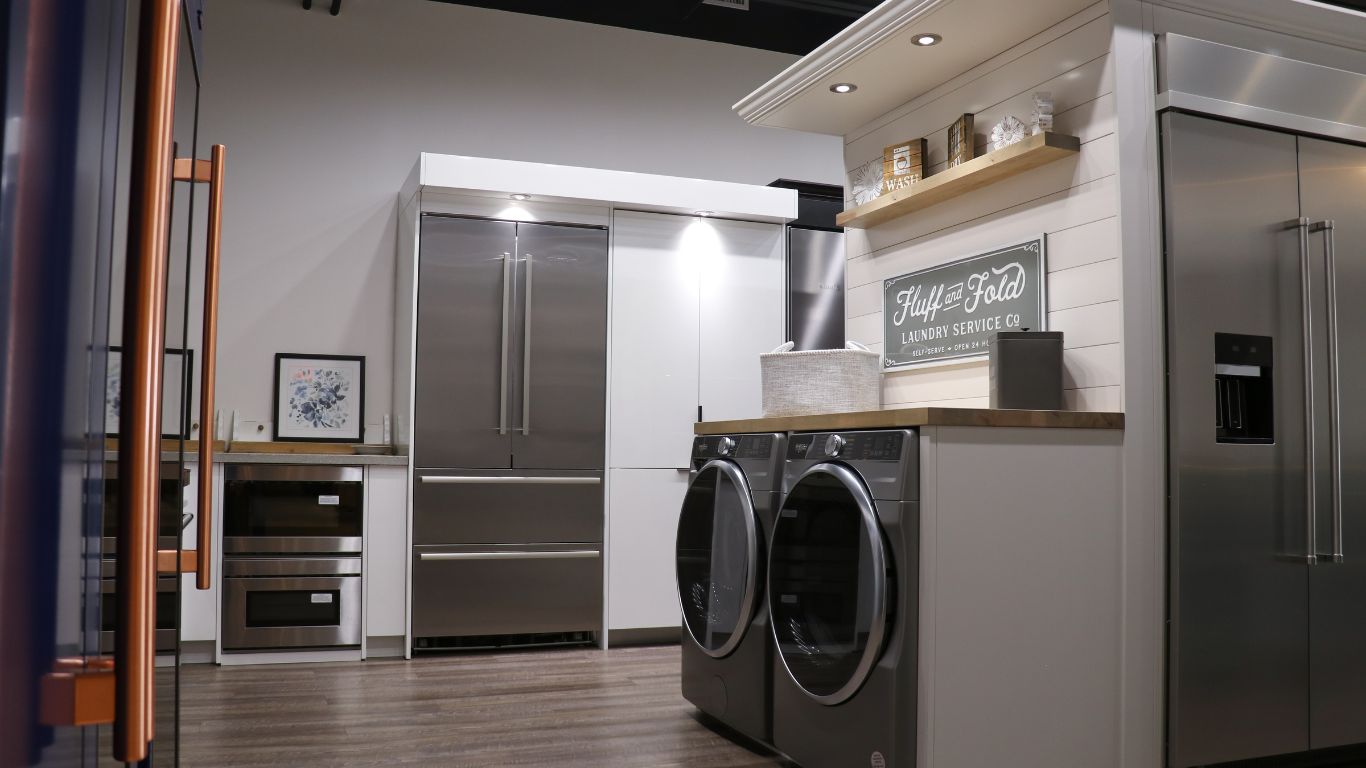
In residential design, laundry spaces have evolved far beyond the utilitarian basement corners of decades past. Today’s homeowners increasingly expect laundry rooms to reflect the same thoughtful planning, aesthetics, performance, and convenience as kitchens and primary baths. For architects, designers and builders, that shift means appliance selection matters more than ever.
One of the most common specification questions in both new construction and renovation projects is deceptively simple:
Should the project use a front-load or top-load washing machine?
While homeowners may initially focus on price or brand preference, professionals know the decision impacts everything from cabinetry layouts and plumbing placement to accessibility, acoustics, long-term operating costs, and even resale perception.
Here’s a deeper look at the key design and performance considerations that should guide the front-load vs. top-load conversation with clients.
Understanding the Core Difference
At the most basic level:
- Front-load washers clean clothes by tumbling garments horizontally through a shallow pool of water.
- Top-load washers use a vertical drum and either a central agitator or an impeller plate to move clothing through water.
Both formats continue to evolve, particularly in the premium appliance segment, where manufacturers are integrating smart diagnostics, advanced balancing systems, ultra-quiet motors, and increasingly sophisticated fabric-care technology.
But the right choice depends heavily on the project, the client profile, and the intended use of the space. Here are a few considerations:
Washer Upfront Cost vs. Total Cost of Ownership
For many clients, initial purchase price remains the starting point of the discussion.
Top-Load Washers: Lower Entry Cost
Top-load models generally offer lower upfront pricing, particularly in builder-grade and mid-tier categories. They are often perceived as straightforward, familiar, and easy to use, making them appealing for:
- Entry-level homes
- Multifamily developments
- Secondary laundry spaces
- Budget-sensitive remodels
For builders managing appliance allowances across multiple units or production homes, top-load configurations can help control costs without sacrificing reliability.
Front-Load Washers: Higher Initial Investment
Front-load machines typically command higher pricing due to:
- More advanced suspension systems
- Enhanced water and energy efficiency
- Higher spin speeds
- More sophisticated electronics and wash programming
However, clients evaluating appliances through a long-term ownership lens often find the economics shift over time.
Long-Term Operating Costs
Front-load washers generally:
- Use significantly less water
- Require less detergent
- Extract more moisture during spin cycles
- Reduce dryer run times and energy usage
For homeowners planning to remain in a property long-term, these efficiency gains can meaningfully reduce utility expenses over the appliance lifespan.
For professionals, this becomes especially relevant in:
- Luxury custom homes
- Sustainability-focused projects
- High-usage family households
- Net-zero or energy-conscious designs
The key specification takeaway: top-loaders often win on initial budget; front-loaders frequently win on lifecycle cost efficiency.
Water and Energy Efficiency of Different Washers
Efficiency is no longer a niche concern. Many homeowners now actively prioritize sustainability, and local energy codes increasingly reinforce those expectations.
Why Front-Load Washers Typically Lead in Efficiency
Front-load machines use gravity and tumbling action rather than filling the drum completely with water. As a result, they typically:
- Consume less water per cycle
- Require less energy to heat water
- Spin at higher RPMs, removing more moisture before drying
This higher extraction rate is often overlooked in appliance planning discussions, yet it can substantially impact whole-home energy usage.
Top-Load Efficiency Has Improved
Modern high-efficiency (HE) top-load washers have narrowed the gap considerably, especially impeller-driven models. However, traditional agitator designs generally still use:
- More water
- Longer dry times
- More detergent
For architects and designers pursuing:
- LEED projects
- ENERGY STAR-focused homes
- Environmentally conscious client goals
front-load models often align more naturally with the project narrative.
Washer Cleaning Performance and Fabric Care
Clients frequently assume “more water equals cleaner clothes,” but cleaning performance is more nuanced.
Front-Load Advantages
Front-load washers are widely regarded as superior for:
- Stain removal
- Gentle fabric handling
- Delicates and performance textiles
- Large bedding items
The tumbling action creates effective mechanical cleaning while reducing wear on garments. For clients investing heavily in wardrobes, linens, and specialty fabrics, this can be a major selling point.
Top-Load Strengths
Top-load washers continue to appeal to users who prioritize:
- Faster cycle familiarity
- Simpler loading
- Heavy-duty everyday cleaning
Some homeowners also strongly prefer the ability to:
- Add forgotten items mid-cycle
- Avoid bending down
- Wash heavily soiled workwear
For active families, mudrooms, pet-oriented households, or utility-focused laundry areas, top-loaders can still be highly practical choices.
Washer Ergonomics and Accessibility: An Often-Overlooked Design Factor
One of the most overlooked specification considerations is how appliance selection impacts physical usability over time.
Height and Reach Considerations
This is especially important when designing for:
- Aging-in-place clients
- Multigenerational households
- Luxury universal-design projects
Front-Load Ergonomics
Front-load machines require bending unless elevated on pedestals. However, pedestal installations can improve accessibility while adding valuable storage.
They also allow:
- Side-by-side countertop installations
- Integrated folding stations
- More custom cabinetry flexibility
Top-Load Ergonomics
Top-load washers eliminate the need to crouch, but shorter users may struggle to reach the bottom of deep drums—particularly in oversized capacity models.
This becomes especially relevant for:
- Petite homeowners or renters
- Elderly users
- Children assisting with laundry tasks
Professionals should evaluate not simply appliance dimensions, but actual user interaction with the appliance.
Laundry Room Space Planning and Room Layout
Laundry room design increasingly functions as a true extension of the home’s interior architecture.
Front-Load Washer Space Advantages
Front-load washers offer significant flexibility because they can:
- Stack vertically
- Fit under counters
- Align with cabinetry systems
- Create continuous work surfaces
This makes them ideal for:
- Urban residences
- Condominiums
- Smaller footprints
- High-design utility rooms
Stacked front-load configurations can dramatically reduce required square footage while maintaining full-size performance.
Top-Load Washer Space Considerations
Top-load washers require:
- Vertical lid clearance
- Unobstructed overhead access
- Additional maneuvering space
As a result, they can limit:
- Upper cabinetry placement
- Countertop continuity
- Shelving opportunities
However, they may still work well in:
- Larger suburban homes
- Garage laundry areas
- Utility-centered mudrooms
The specification question becomes not simply “Which washer?” but rather:
“How does this appliance support the overall architecture of the room?”
Washer Sound and Vibration: Critical in Modern Floor Plans
As laundry rooms migrate closer to living spaces and bedrooms, acoustics become increasingly important.
Front-Load Noise Considerations
Front-load washers spin at much higher speeds, which can create:
- Noticeable vibration
- Floor resonance issues
- Structural transfer noise
In poorly reinforced second-floor installations, this can become a serious homeowner complaint.
However, premium front-load models often include:
- Advanced balancing systems
- Direct-drive motors
- Enhanced suspension engineering
- Vibration reduction technology
Top-Load Washer Acoustics
Traditional top-load agitator machines can produce:
- Louder wash-cycle operation
- More mechanical movement
- Increased water noise
Yet some clients still perceive them as “quieter” simply because they generate less high-speed spin vibration.
For architects and builders, appliance acoustics should be evaluated alongside:
- Floor structure
- Room adjacency
- Insulation strategy
- Cabinet integration
This is especially critical in luxury homes where expectations for quiet operation are exceptionally high.
Washer Maintenance, Durability, and Service Considerations
Serviceability matters—not only for homeowners, but also for builders and remodelers managing post-installation satisfaction.
Front-Load Washer Maintenance Considerations
Front-load washers require more proactive maintenance to prevent:
- Door gasket mildew
- Moisture retention
- Odor buildup
Proper homeowner education is important:
- Leave the door ajar after use
- Clean seals periodically
- Use appropriate detergents
High-end models have improved significantly in this area, but the issue still deserves discussion upfront.
Top-Load Washer Durability Perception
Many homeowners perceive top-load machines as:
- Simpler
- More durable
- Easier to maintain
While modern electronics have complicated all appliance categories, top-loaders often maintain a reputation for lower-maintenance ownership.
Washer Resale Positioning and Client Perception
Appliance selection increasingly influences perceived home quality.
In luxury and upper-mid-market homes, front-load laundry systems are often associated with:
- Modern design
- Premium finishes
- Energy consciousness
- Integrated architecture
They visually align with today’s highly designed laundry rooms and custom cabinetry systems.
Meanwhile, top-loaders may resonate more strongly in:
- Family-oriented homes
- Utility-first spaces
- Traditional layouts
- Rural or practical-use environments
The “right” answer depends heavily on the homeowner profile and neighborhood expectations.
Helping Clients Make the Right Choice on Washers
Ultimately, the best laundry specification is not about declaring one format universally superior. It’s about aligning appliance selection with:
- The architecture of the space
- The homeowner’s lifestyle
- Long-term operational goals
- Accessibility needs
- Acoustic realities
- Aesthetic priorities
- Budget expectations
That’s where experienced appliance partner such as ADU, the Mid-Atlantic’s trusted appliance store since 1982, can provide real value.
We are appliance experts and help industry professionals, such as designers and builders, avoid common specification mistakes involving:
- Clearance conflicts
- Ventilation limitations
- Pedestal height issues
- Noise transfer
- Cabinet integration problems
- Utility placement constraints
In today’s market, appliance selection is no longer a last-minute decision—it’s an integral component of thoughtful residential design. ADU can help industry professionals make the right washer configuration every time.

