
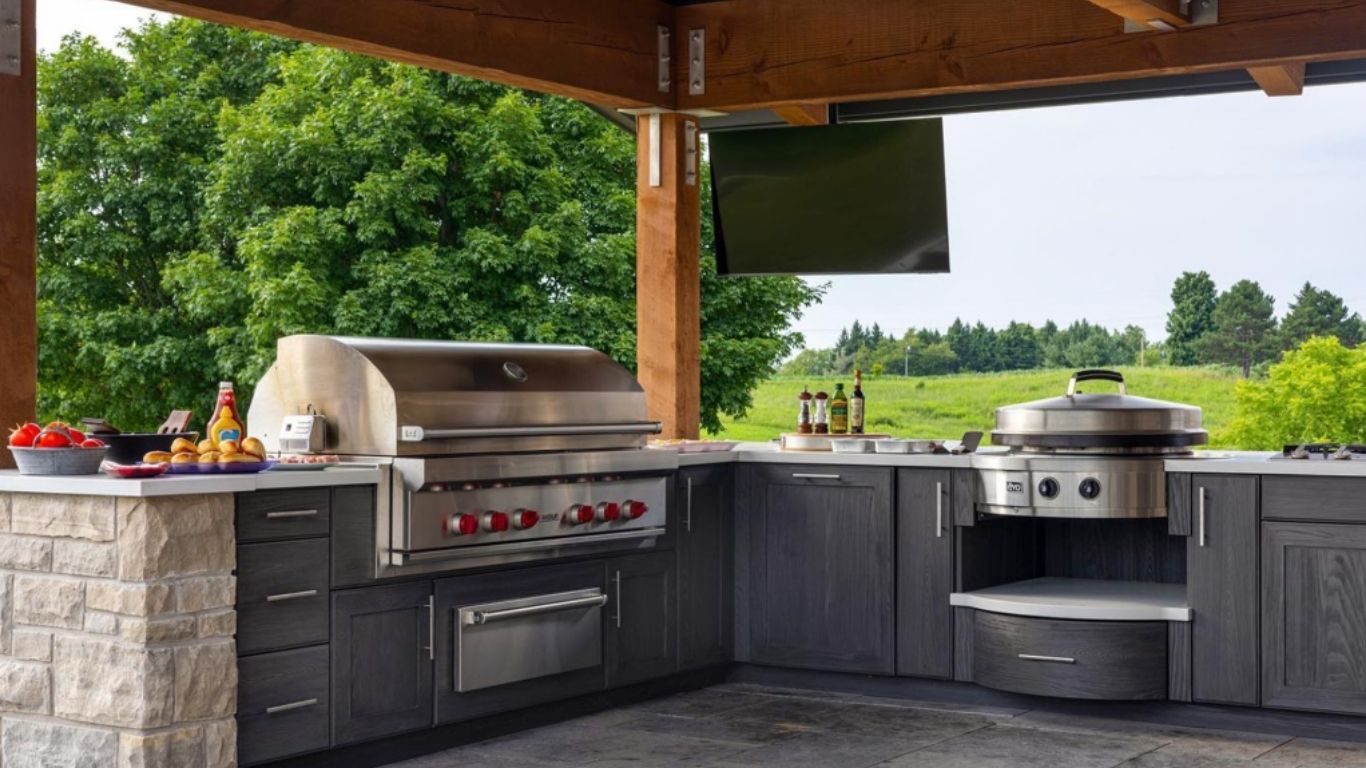
For many, barbecue is more than food. It’s closer to a religion, an art form, a cherished way of life to be shared but also revered. In fact, even American chef and global traveler Anthony Bourdain once said, “Barbecue may not be the road to world peace, but it’s a start.”
Translation: Designing and constructing outdoor barbecue spaces is the real deal. So, for trade professionals including architects, interior designers, and high-end builders, the modern backyard is no longer just a patio with a round Weber grill on wheels. They can be extensions of the home where clients want outdoor culinary spaces that mirror the performance, aesthetics, and versatility of their indoor kitchens, particularly those with a passion for grilling and barbecuing.
When designing these outdoor cooking spaces, one of the first and most critical decisions revolves around the primary heating method namely gas, charcoal and smoker. This article provides more background on each, including design and installation implications and considerations.
Understanding the Cooking Basics: Fuel, Heat, and Flow
Each of these three cooking methods rely on a fundamentally distinct physical process to transfer heat and, more importantly, flavor to food.
Gas: Precision and Immediacy
Luxury gas grills, such as those from Wolf or Viking, rely on open flames heating ceramic briquettes, volcanic rock, or stainless-steel vaporizing bars, which then radiate heat upward to the grates.
- The Fuel: These systems run on either liquid propane (LP) or natural gas (NG). For permanent outdoor islands, natural gas is almost universally specified, requiring early-stage plumbing coordination. Propane requires dedicated, ventilated under-counter tank drawers.
- The Style: Gas provides pure, clean, convective, and radiant heat. It transfers minimal intrinsic flavor from the fuel itself, meaning the flavor comes from caramelization of the meat juices dripping onto the radiant heating elements below.
Charcoal: The Traditional Fire
Charcoal cooking including both the open-grate built-in or a ceramic style “eggs” from LYNX, use the combustion of carbonized wood blocks to generate intense, dry heat.
- The Fuel: High-end clients almost exclusively utilize lump charcoal (made from real hardwood pieces) rather than chemical-laden briquettes.
- The Style: Charcoal cooks via direct, high-intensity radiant infrared heat and convective air currents. As the wood burns, it releases complex organic compounds that impart a classic, distinctively smoky, charred flavor profile.=
Smokers: Low-and-Slow
Dedicated smokers, including those from Coyote, are designed for indirect cooking at low temperatures (usually 225 to 275 degrees Fahrenheit).
- The Fuel: Pellet smokers use compressed hardwood sawdust pellets, fed via an automated electric auger into a burn pot. Offset units may utilize actual hardwood logs. (There are even some electric smokers that can be used indoors, such as this model from GE).
- The Style: Smokers isolate the food completely from direct heat or flames. A fire is built in a separate chamber, and a convective draft pulls the heat and wood smoke across the food and out a chimney. The heat source is purely convective, while the wood smoke slowly breaks down collagen in tough cuts of meat.
Head-to-Head Specification Guide for Trade Professionals
When presenting these options during the design phase, you can utilize this structural breakdown to help clients weigh the tradeoffs based on their specific lifestyle and property constraints.
|
Comparative Parameter |
Gas Systems | Charcoal |
Smokers |
| Taste & Flavor Profile | Clean and neutral. Best for highlighting marinades, delicate seafood, vegetables, and high-end steaks where a heavy wood profile isn’t desired. | Distinctive. Exceptional for traditional burgers, steaks, and wood-fired pizzas, delivering a classic crust and char. | Deep, authentic wood-smoke flavor. Essential for low-and-slow cuts like brisket, ribs, pork shoulder, and cold-smoking cheeses or fish. |
| Time Required to Cook | Minimal. Heats up in 10–15 minutes. Cooking times are fast, making it the definitive choice for quick weeknight meals and high-volume entertaining. | Moderate. Requires 20–30 minutes to ignite and have coals ready. Cooking requires active monitoring of active embers. | High. Can take 30 minutes to stabilize temperatures, and cooking cycles regularly last anywhere from 4 to 16 hours. |
| Effort & Skill Level | Low. Turn a knob, press an igniter, and walk away. Unparalleled temperature responsiveness makes it highly forgiving for novice users. | High. Typically requires manual fire lighting, chimney starters, and active manual dampener adjustments to maintain desired heat zones. | Low to High. Pellet smokers offer “set-it-and-forget-it” digital thermostats. Offset wood-log smokers require mastery of fire-tending and temp control. |
| Spatial & Location Constraints | Flexible, but requires line plumbing or tank access. Can be built directly into non-combustible islands with standard clearance. | Requires consideration. Generates significant ambient ash and flying embers. Cannot be used under low pergolas or combustible eaves. | Heavy ventilation constraints. Produces continuous thick smoke emissions. Must be positioned downwind from the main living area and indoor intake vents. |
| Maintenance & Upkeep | Easy to moderate. Periodic grate brushing and emptying a grease tray. High-quality stainless-steel components resist rust for decades. | High. Requires constant removal of cold ash to maintain airflow. Internal ceramic or iron linings must be kept dry to prevent cracking. | Moderate to High. Requires regular vacuuming of fine ash out of the pellet burn pot and scraping down internal heat deflector plates. |
| Cost of Ownership | High Upfront / Low Ongoing. Higher installation costs for natural gas lines; operation, though, is less expensive over time. | Low Upfront / High Ongoing. Less or appliance investment, but premium lump charcoal can be a pricy, recurring consumable fuel. | Moderate to High. Like charcoal, ongoing cost of premium wood and/or pellets is moderate but consistent. |
| Structural Integration | Requires insulated jackets if built into combustible cabinetry. Demands precise gas pressure regulator matching. | Requires dedicated stone or non-combustible nesting areas. Must account for safe, fire-proof disposal of hot coals and ash. | Needs access to dedicated outdoor GFCI electrical outlets for the digital controller, internal auger, and induction fans. |
Elevating Your Build with a Trusted Wholesale Distributor like ADU
Whether your upcoming architectural plans call for a sleek, flush-integrated linear gas cooktop grid or a rugged, heavy-gauge built-in pellet smoker, successful execution relies entirely on the precision of your appliance vendors and technical specifications. As builders and designers know, a single missed clearance dimension or an uncoordinated utility line can bring residential projects to a grinding halt.
To avoid those challenges, it’s important to partner with specialized wholesale appliance distributor like ADU that works with designers, architects, and custom builders. ADU serves as an extension of your design team by providing:
- Comprehensive Specification Coordination: ADU understands the nuances of outdoor appliance integration, from the precise electrical load requirements of a pellet smoker’s auger to the exact dimensions of an insulated safety jacket needed to embed a high-BTU gas grill into a custom island framework.
- Trade-Only Support Environments: ADU has nine centers and showrooms in the Mid-Atlantic where you can bring your clients to physically interact with the luxury finishes, evaluate knob tactile response, and visualize how designs and appliances look in person.
- Proactive Inventory Security: Project timelines are inherently fluid. ADU warehousing can keep your luxury outdoor packages securely allocated and staged, ensuring everything arrives at the job site exactly when the construction schedule dictates.
In short, working with an experienced appliance partner such as ADU, the Mid-Atlantic’s trusted appliance store since 1982, trade professionals can comfortably deliver outdoor culinary spaces that are structurally sound, code-compliant, and perfectly optimized for the clients’ lifestyle.
And trust us, for clients, that really sizzles.

