
Maybe you think you know a luxury appliance when you see it.
It’s pricey. Sleek looking. High-quality and modern with the latest technology.
But what does “luxury” in today’s appliance industry, and does our definition of the label from years ago hold true today?
Spoiler alert, the definition of “luxury” in the appliance sector has undergone a fundamental shift. It has evolved from simple visuals (think early high-end, stainless steel in the kitchen that went mainstream by the 90s) to a sophisticated blend of custom design and materials, invisible technology, and long-term, high-level performance. For builders, designers and others in the professional trade, understanding this new landscape is essential to delivering projects that meet the soaring expectations of modern homeowners.
The Evolution of Luxury Appliances
Traditionally, luxury appliances were often defined by size and weight. A “pro-style” range was judged by the thickness of its cast-iron grates and the literal BTU output of its burners. A luxury refrigerator was characterized primarily by its massive footprint and heavy, industrial handle. In this era, luxury was synonymous with professional grade, bringing the brute force of a restaurant kitchen into the residential home.
Today, that definition has pivoted. While power remains a baseline requirement, luxury is now more closely defined by intentionality and integration.
The Shift to “Invisible” Luxury
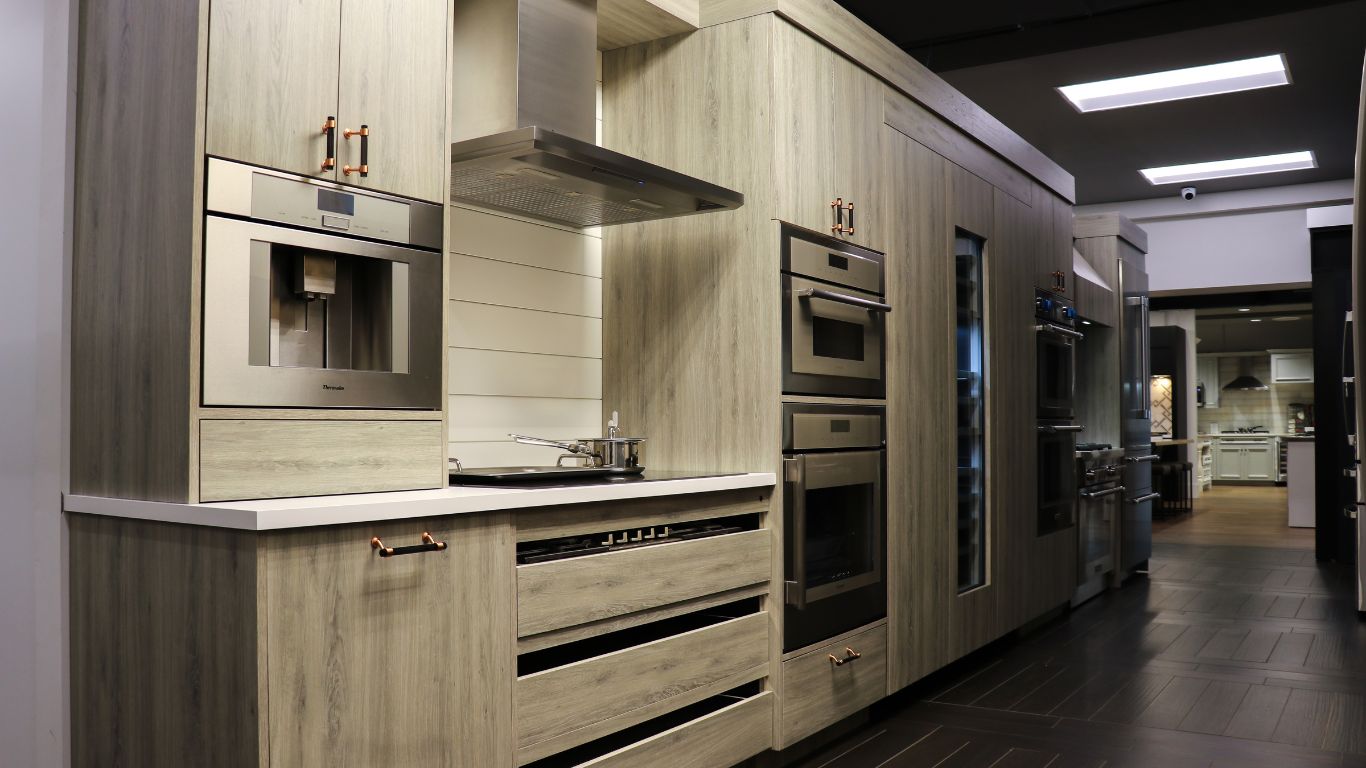
We have entered an era of “quiet” luxury. Modern designers and architects are increasingly moving away from the industrial look in favor of integrated, panel-ready appliances. The goal is often to make the kitchen feel like a continuation of the living space rather than a separate utility zone. For example:
- Then: A large, protruding stainless steel refrigerator that announced its presence.
- Now: A flush-mount, panel-ready column refrigerator that disappears into the cabinetry, using motorized door-opening technology instead of visible handles.
Redefining the Appliance Essentials
The notion of luxury has changed across every category, shifting the target from the “show-off cook” to the “wellness-focused” and “time-starved” affluent consumer.
Refrigeration: Preservation over Capacity
Luxury refrigeration is no longer just about how many groceries you can fit; it’s about how long you can keep them fresh. Consider the following:
- Dual Compressors and Evaporators: Standard in the luxury segment (like Bosch 800 Series or Sub-Zero), these systems keep the moist air of the refrigerator separate from the dry air of the freezer, preventing flavor transfer and significantly extending the life of fresh produce.
- Specialized Zones: Brands like Liebherr offer patented BioFresh, or climate-control, technology in drawers that allow users to set exact humidity and temperature levels for specific food groups.
Cooking: Precision and Speed
In the range and oven category, the “Green Revolution” has hit the luxury market. Induction cooking is increasingly the preferred choice for high-end builds.
- Why It’s Luxury: It offers faster boiling speeds, superior safety, and most importantly for designers, a sleek, easy-to-clean aesthetic that doesn’t require large ventilation hoods.
- Smart Sensors for Cooktops and Ovens: New models, such as Thermador Smart Cooktop or Café induction oven + range, feature temperature probes and internal cameras, respectively, that can identify the type of food being cooked and adjust settings automatically.
Laundry: Fabric Care and Automation
Luxury washers and dryers have shifted their focus to garment longevity. High-end clients are increasingly investing in luxury wardrobes, and they require appliances that treat silk, wool, and technical fabrics with care. Some luxury considerations include:
- Heat Pump Technology: These dryers use lower temperatures and recycled air, which is gentler on clothes and significantly more energy efficient.
- Auto-Dosing: High-end units now feature bulk detergent reservoirs that automatically calculate the exact amount of soap needed based on load weight and soil levels, preventing chemical buildup on expensive linens.
The Role of Customer Preferences and Demands in Luxury Appliances
The modern luxury client is driven by a new set of values that builders and designers must navigate. These include:
- Health and Wellness: Features like steam ovens and vacuum-sealing drawers (for sous-vide cooking) as homeowners prioritize nutrient retention and healthy eating.
- Acoustic Comfort: In open-concept homes, the noise of a dishwasher or a range hood is a dealbreaker. Luxury is now measured in decibels. A dishwasher operating at 38–42 dB (effectively silent) is a hallmark of a high-end kitchen.
- Sustainability: “Eco” is no longer a compromise. Luxury brands are leading the way in sustainable manufacturing and energy efficiency, allowing builders to help clients reduce their carbon footprint without sacrificing performance.
Price vs. Total Cost of Ownership (TCO) in Luxury Appliances
Is luxury always more expensive? In the world of fashion, the answer is yes. But when looking at appliances where the total cost of ownership plays a role, luxury appliances often prove to be the more economical choice over a 15- to 20-year horizon. Let’s consider some key parameters that heavily influence the true cost of appliances:
- Durability: Standard “builder-grade” appliances typically have a lifespan of 7–9 years. Luxury brands like Miele or Sub-Zero are engineered and tested to last 20+ years. A single, say, $2,500 luxury dishwasher avoids the labor costs, delivery fees, and environmental waste (to say nothing of the hassle!) stemming from multiple replacements of a lower upfront cost model.
- Repairability: High-end manufacturers maintain a robust supply chain of parts and authorized service technicians. While a mid-range “disposable” appliance is often cheaper to replace than to fix, a luxury appliance is designed to be serviced and maintained.
- Home Valuation: Real estate data suggests that homes with “chef-friendly” appliance packages (Wolf, Gaggenau) may sell faster at higher price points.
Material Comparison: Industrial vs. Consumer Grade Appliances
Luxury appliances typically prioritize higher-density, non-reactive materials that withstand heat, moisture, and friction more effectively than the materials found in low- or mid-range models. They also use durable metal for knobs, dials and handles over plastic equivalents that can degrade, fade or break over time. Consider the following comparisons:
| Component | Standard Appliance | Luxury Appliance |
| Interior Linings | Plastic or thin enamel; prone to odors and staining. | Stainless steel or high-grade glass; non-porous and resists bacteria. |
| Mechanical Parts | Plastic gears and belt-driven motors. | Cast iron, brass, and brushless DC motors; built for higher torque and less wear. |
| Insulation | Standard fiberglass or foam. | High-density vacuum insulation; provides superior temperature stability and near-silent operation. |
| User Interface | Plastic membranes or capacitive touch. | Machined metal knobs and heavy-duty glass; tactile and resistant to chemical cleaners. |
Bringing it all together by partnering with an expert distributor like ADU
For the professional builder, architect, or designer, the “luxury” of a luxury appliance isn’t just in the product, it’s in the selection and installation process. Here at ADU, the Mid-Atlantic’s trusted appliance store since 1982, we provide the technical specifications, architectural clearance data, and pre-installation inspections that ensure these sophisticated machines integrate perfectly into your custom designs. When you specify luxury, you are making a promise of performance. ADU will ensure that promise is kept from the blueprint to the final walkthrough.
It’s a definition of luxury that never goes out of style.

