
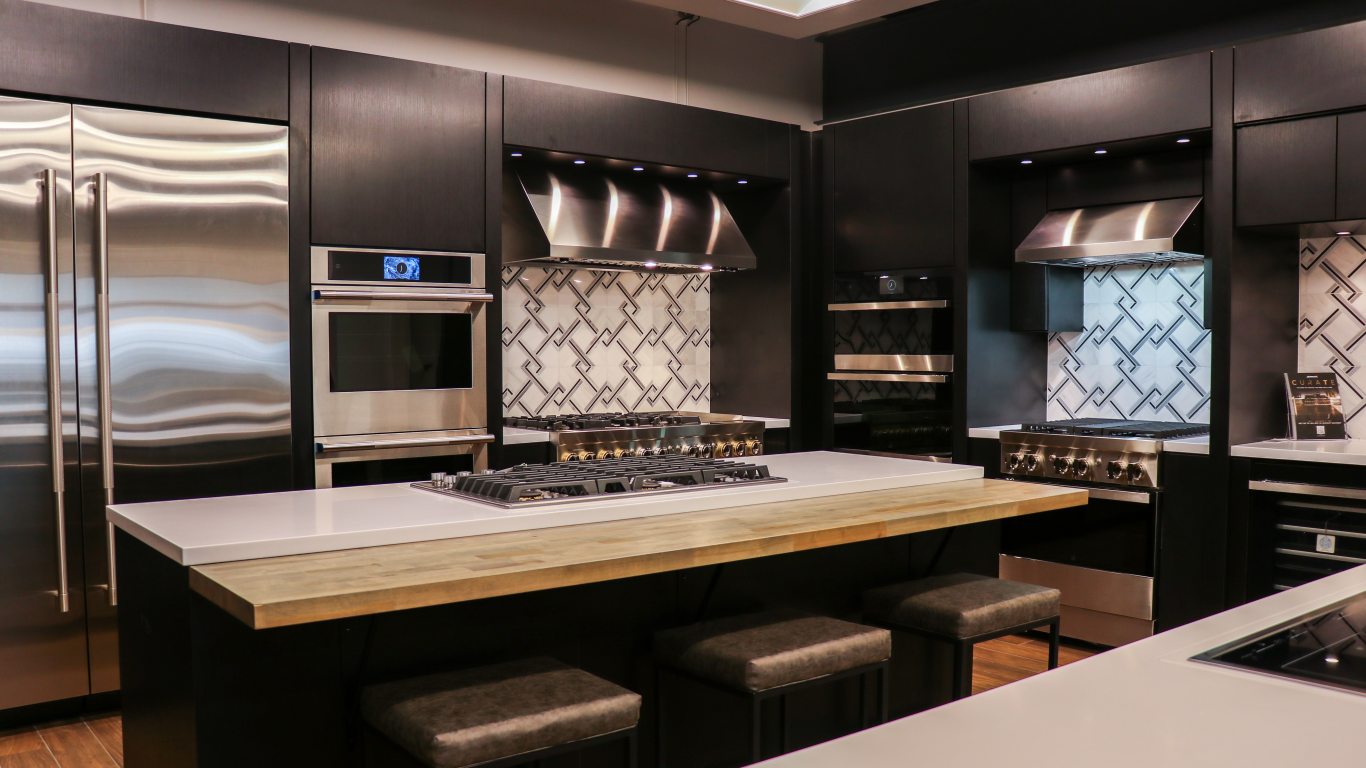
For home remodelers, kitchen designers, residential builders, and other industry professionals, appliance selection is no longer a late-stage checkbox. In fact, is now quite the opposite: a foundational decision that affects layout, infrastructure, budget, performance, energy efficiency, and long-term homeowner satisfaction.
Today’s kitchens and laundry rooms are expected to be smarter, quieter, more efficient, and more integrated than ever before. Selecting the right appliances early in the design process reduces costly change orders, avoids installation headaches, and ensures that the finished space performs as beautifully as it looks on day one, and years down the road.
This article expands on the appliance planning questionnaire used by professionals during the specification process and adds real-world context around why these questions matter. Whether you’re planning a full kitchen remodel, a laundry room redesign, or specifying appliances for new residential construction, this guide provides deeper insight into appliance selection, coordination, and best practices.
Appliance Planning: Why Early Decisions Save Time and Money
One of the most common mistakes in residential construction is selecting appliances after cabinetry, countertops, and utilities are already locked in. Appliances dictate cabinet dimensions, electrical requirements, gas and water connections, ventilation needs, and even structural considerations. For instance, a refrigerator that’s an inch or two too deep or a pro cooking range that requires higher BTU ventilation can derail timelines and budgets fast. Nobody wants that.
As such, early appliance planning allows remodelers and designers to:
- Confirm rough-in requirements for electrical, plumbing, and gas
- Ensure proper clearances, door swings, and accessibility
- Coordinate cabinetry, panel-ready appliances, and custom millwork
- Avoid costly rework or appliance substitutions late in the project
For professionals, appliance selection is as much about risk management as it is about aesthetics.
Refrigerators: The Anchor of Kitchen Design
Refrigerators often dictate the entire kitchen layout. Popular options such as cabinet-depth French door refrigerators, built-in refrigeration columns, under-counter refrigerator drawers, and wine storage units all have very different dimensional and ventilation requirements.
Key considerations include:
- Configuration: French door, side-by-side, bottom freezer, or column-style
- Installation type: Flush-mounted vs. cabinet-depth
- Finish: Stainless steel, panel-ready, or custom wood panels
- Door swing and clearance: Especially critical in tight kitchens or adjacent walls
- Performance features: Dual compressors, temperature-controlled drawers, humidity zones
Consumers and homeowners increasingly search for terms like counter-depth refrigerator, panel-ready refrigerator, built-in fridge, and wine storage refrigerator. Designers who understand these categories can better guide clients toward options that properly align with both lifestyle and layout.
Dishwashers: Quiet Performance Meets Smart Design
Dishwashers are one of the most frequently used appliances in the home, yet their importance is often underestimated. Today’s buyers expect ultra-quiet operation, flexible racks, and energy-efficient performance.
Professionals should pay close attention to:
- Decibel (dB) rating: Anything under 50 dB is considered quiet; premium models drop well below that
- Energy Star certification: Lower utility costs and potential rebates
- ADA-compliant models: Required in accessible designs or aging-in-place projects
- Installation type: Standard vs. raised installation for ergonomics
- Electrical requirements: Plug-in vs. hardwired models
Replacing an older dishwasher may also trigger updates to garbage disposers, electrical boxes, or plumbing connections—details best addressed during planning, not installation.
Ranges and Cooktops: Matching Cooking Style to Infrastructure
Selecting a range or cooktop involves more than choosing gas or electric. Cooking habits, ventilation capacity, and available utilities all play a role.
Options include:
- Freestanding vs. slide-in ranges
- Fuel types: Gas, electric, dual-fuel, induction
- Specialty features: Griddles, grills, wok burners, convection ovens
- Pro-style ranges: Often 36″, 48″, or larger, with significantly higher BTU output
Induction cooking continues to gain market interest due to its energy efficiency, safety, and precision, making induction cooktop installation a fast-growing search term among both consumers and professionals.
From a construction perspective, verifying gas type (natural gas vs. LP), electrical capacity, and countertop cutouts is critical, especially with slide-in or professional ranges.
Pro Ranges: Design Statement Meets Logistical Reality
Professional-grade ranges bring commercial aesthetics and power into residential kitchens, but they also introduce complexity. These units can weigh several hundred pounds and may require reinforced flooring, wider doorways, or specialized delivery teams.
Designers and builders should account for:
- Proper ventilation sizing based on total BTUs
- Back-guard or island trim selection
- Fuel conversion limitations
- Delivery path and installation logistics
Failing to plan for these details can result in damaged flooring, delayed installations, or unexpected costs.
Ventilation: Performance, Safety, and Code Compliance
Ventilation is an often misunderstood, but critical, component of kitchen appliance planning. Range hoods, inserts, downdrafts, and external blowers must be sized correctly to remove heat, grease, smoke, and odors.
A common guideline is:
- 100 CFM of ventilation for every 10,000 BTUs of cooking power
However, duct length, turns, ceiling height, and hood depth all influence real-world performance. Downdraft systems may work for light cooking but are generally not recommended for high-BTU ranges or indoor grilling.
Search terms such as kitchen ventilation hood, CFM calculation, and external blower range hood reflect growing consumer awareness of indoor air quality.
Microwaves and Speed Ovens: Rethinking Placement and Function
Microwaves have evolved well beyond countertop units. Built-in microwave drawers, convection microwaves, and speed ovens now play a strategic role in modern kitchen design.
Professionals should consider:
- Ergonomic placement and accessibility
- Integration with wall ovens and warming drawers
- Ventilation requirements for over-the-range models
- Power requirements for speed cooking technology
These appliances are often part of a coordinated appliance suite, reinforcing the importance of early specification.
Under-Counter Appliances: Small Units, Big Impact
Under-counter refrigerators, beverage centers, ice makers, and wine storage units are increasingly popular in kitchens, bars, and entertaining spaces. Despite their size, these appliances require precise planning.
Key factors include:
- Cabinet width and door swing
- Drain lines for ice makers
- Outdoor-rated certifications
- Panel-ready options and overlay dimensions
These appliances add convenience and luxury but can easily become problem areas if overlooked during design.
Laundry Appliances: Performance Meets Space Planning
Laundry rooms are no longer afterthoughts. Homeowners expect efficient, quiet, and space-conscious solutions.
When selecting washers and dryers, professionals should evaluate:
- Front-load vs. top-load washers
- Stackable and compact units
- Gas vs. electric dryers
- Venting requirements and moisture management
- Washer-dryer combination units for tight spaces
Energy efficiency, water usage, and noise levels are major decision drivers, especially in multi-family or urban residential construction.
Final Thoughts: Appliance Selection as a Professional Advantage
ADU is a leading appliance distributor in the Mid-Atlantic, carrying more than 40 brands and thousands of refrigerators, ovens, ranges, dishwashers, washers and dryers for builders, designers, contractors, architects and homeowners who want the perfect appliance at competitive prices for their next project.
We also know that picking the right appliance expertise is a competitive differentiator, and we’re here to help professionals to navigate appliance features, dimensions, energy efficiency, and installation requirements.
By working with ADU, and using a structured appliance planning process and addressing these considerations early, home and multi-family builders and design professionals can:
- Deliver smoother projects
- Reduce costly errors
- Improve client satisfaction
- Create kitchens and laundry rooms that perform as well as they look
In today’s market, thoughtful appliance selection is more than just good design.
It’s good business.

